UNLOCK WORLD is a real-world city exploration game made by gamers. Cities are maps and real places are quest stages; Jeonju is the first example. Local content can differ while using shared rules and production tools, with records designed to continue across journeys. Accounts and cloud synchronization are work beyond the five-week prototype.
The core setting
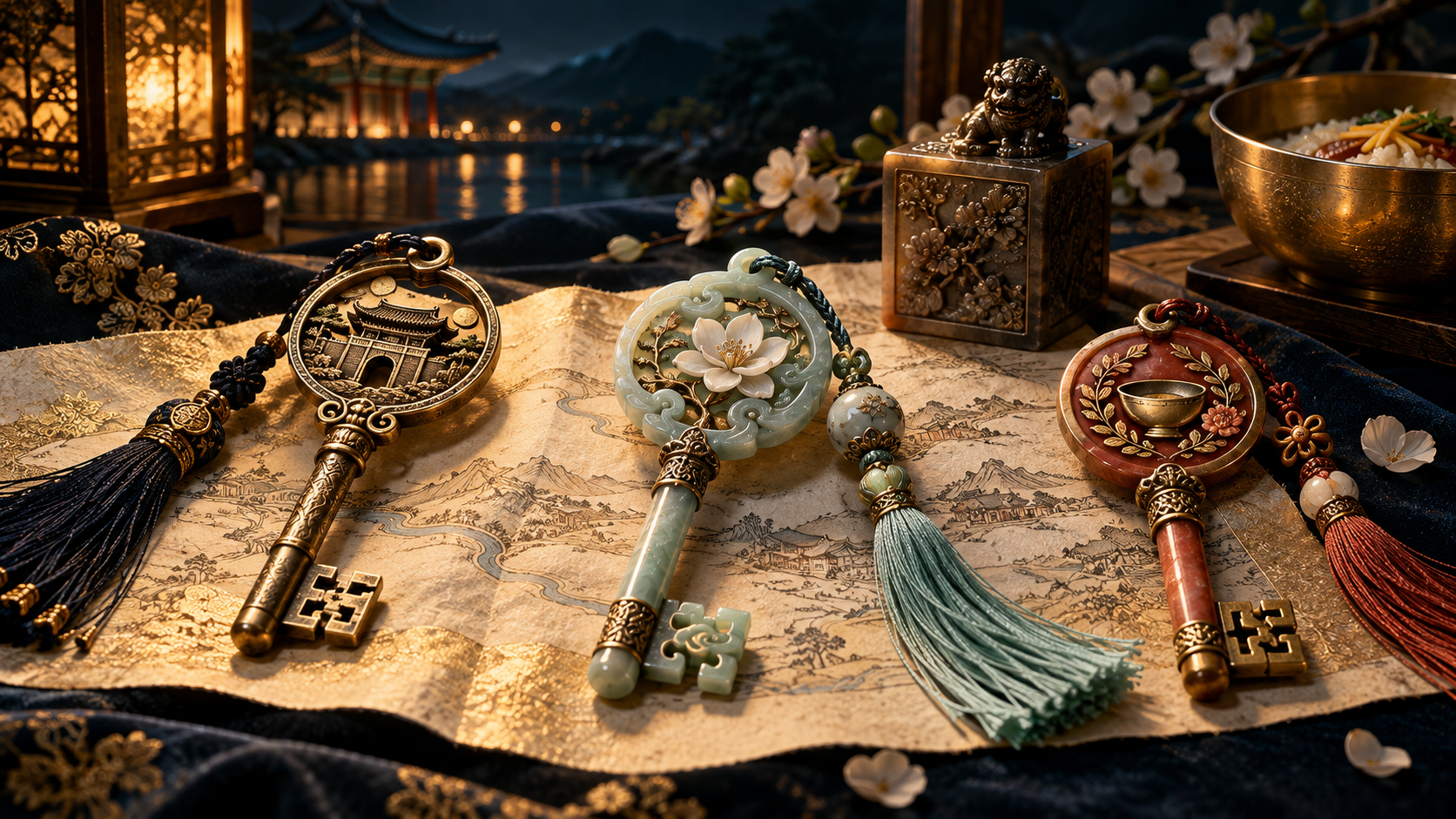
The player receives an unfinished travel map. Keys to its empty areas are found in local stories, people's craftsmanship, and regional flavors. Visiting places and completing quests fills in map fragments; completing a course brings one of the city's stories to its conclusion.
The first Jeonju campaign centers on Keys to the City. The original story The Artisan’s Missing Seal motivates observation and deduction, while official sources and operator review inform the presentation of each place’s history and culture.
The guide character and the player
A guide character can explain goals, react to discoveries and preview regions in a future extension. Phase 1 focuses on the representative quest flow.
The player's featured title and collected badges take priority. The guide leaves room for on-site observation and choice rather than explaining every story. Its name and appearance will be finalized after trademark/design review and user feedback.
Brand and regional content
| Layer | Role | Operation |
|---|
| Shared brand | The UNLOCK WORLD name and core rules | Connect accounts, titles, records, and the guide character |
| Country campaign | Themes for traveling through a country | Organize language, culture, and interregional expeditions |
| City season | Stories in operating cities such as Jeonju | Localize places, routes, badges, and benefits |
| On-site quest | A task at one location | Manage alongside installation, hours, and verification |
UNLOCK WORLD is a working title. The final brand and country/city campaign names will be determined during launch preparation.
Building original IP
Shared characters, story-world concepts, quest scripts, title and badge designs, map presentation, music, and graphics will be produced to consistent standards. Original plans, creators, permissions, and revision history are maintained together. Reuse, translation, and overseas-use rights are specified for outsourced work and photos or stories provided by regional partners.
Develop original stories, visual expression, branding and operational technology. Build on regional partners’ content within agreed usage terms.
Expansion stages and entry conditions
| Stage | Priority | Foundation for the next step |
|---|
| Jeonju prototype | Integrate Android, NFC and the representative quest | Executable flow and test findings |
| Jeonju field extension | Site agreements, seasonal content and operations | Visitor experience and field findings |
| Domestic expansion | Add local content to the shared system | Partner collaboration and repeatable delivery |
| International cities | Local partners and cultural/language localization | Local support and staged validation |
International cities will be selected for local operating partners, visitor demand, content, accessibility and costs. After validating production and operations in Korea, we will apply the model one city at a time. Local trials will determine the scale and timing of each next step.
Global content operations
Future multi-region operations separate quest sources and translations from place, time-zone, opening-hour and benefit data. Once accounts and synchronization are built, records can continue across languages and countries. Adapt regional tasks to local culture while preserving the distinction between visits, completion and rewards.
Differences between missions for international and domestic travelers are based on language, interests, and cultural familiarity rather than fixed nationality rules. A player who is an international visitor in Korea may be a local in another country, so the same choice-based structure can be reused. Local partners review places and factual explanations; the operating team checks consistency in difficulty, rewards, and titles.
Scope of later business opportunities
Future seasons and brand collaborations will develop opportunities for character goods, explorer notebooks, local badges and accommodation or experience programs. Player response and partner terms will guide which products best extend the memory of a trip.
From the first production cycle, illustrations, copy and mission formats will be structured for reuse. The second city’s production time and cost will be compared with the first, while shared tools will manage regional content and operating information to reduce repeated work.
Business Plan · Quest · Title System
Explore this in My Exploration World